
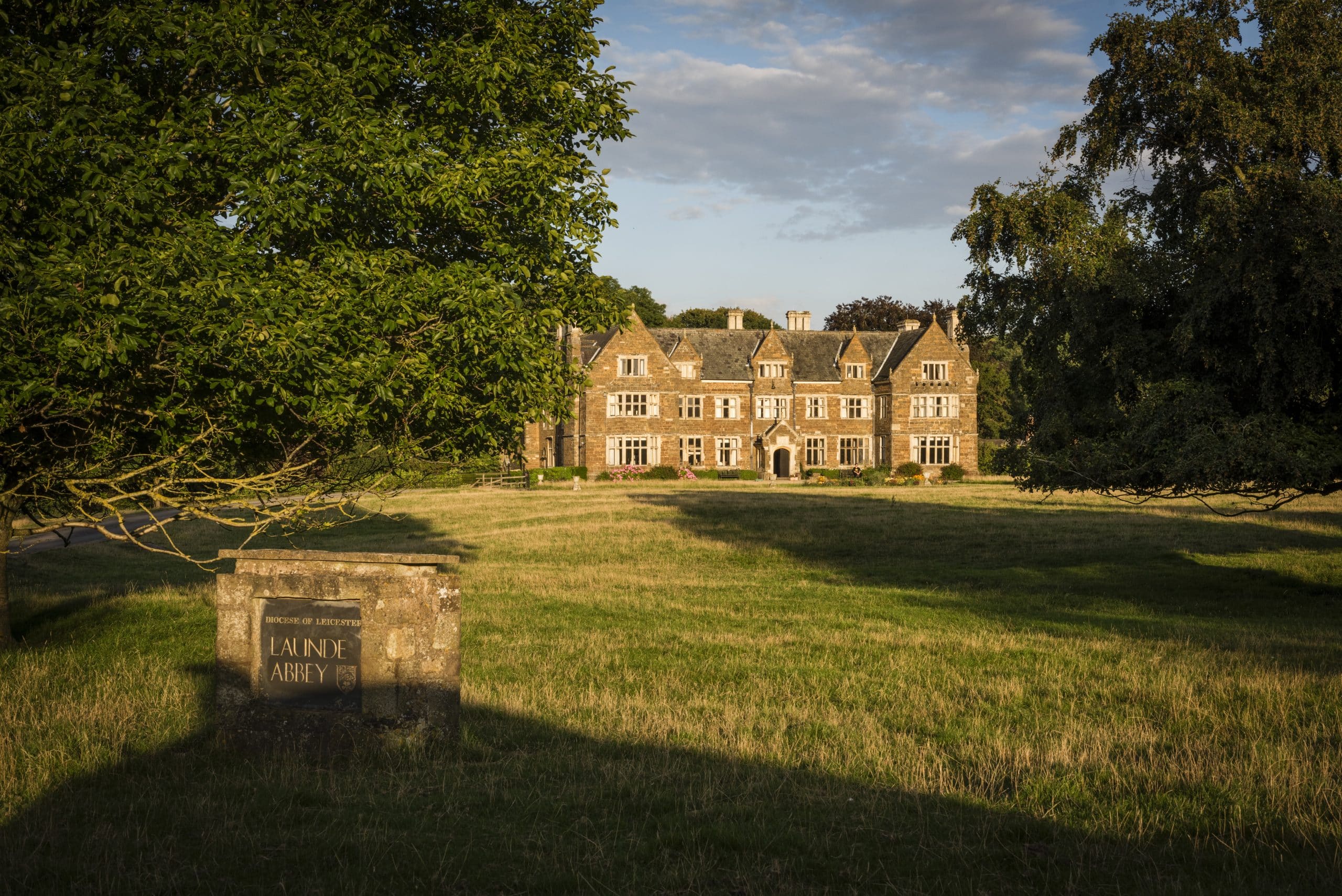
For around 400 years, Launde Abbey was, in fact, an Augustinian priory. Then for another 400 years or so, it became a family manor house and estate. In 1957, it was given to the Diocese of Leicester, who developed it as a place of spiritual retreat. Today, drawing from its long story, it remains a retreat house for the 21st century – a place of prayer, hospitality, community and sanctuary.
The Augustinian Priory
Somewhere between 1119 and 1125, in the reign of Henry I and less than 60 years after the Battle of Hastings, a group of Augustinian canons founded Launde Priory in a clearing in a minor royal forest – ‘Launde’ means clearing or pasture in Old French. The hamlet of Loddington and local land had been given to them by Sir Richard Bassett of Northampton on his marriage to the wealthy heiress Maud, along with churches, other properties and land across 11 counties of which Sir Richard was High Sherrif. The priory was dedicated to St John the Baptist.
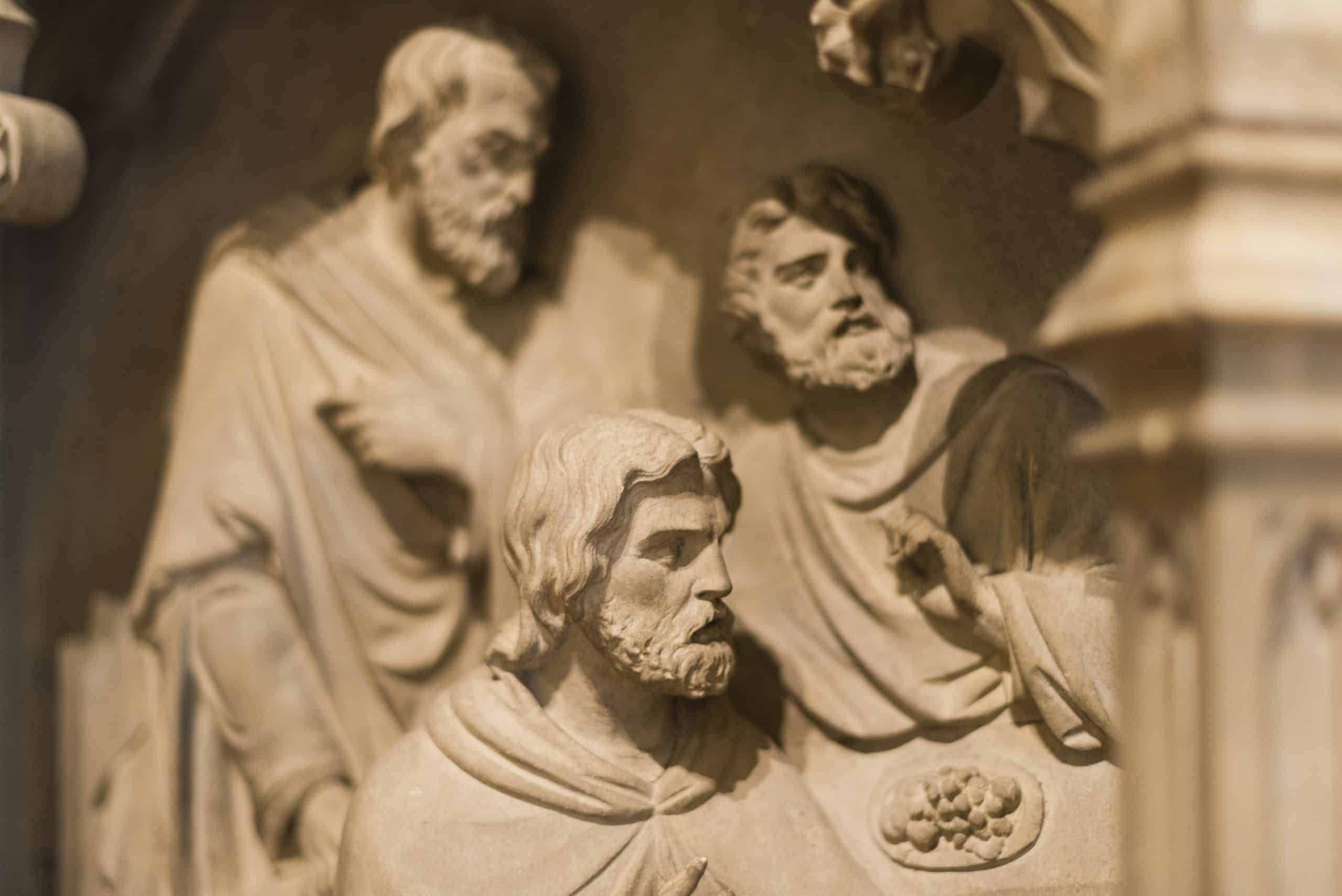
The members of this Augustinian community were all ordained (hence the designation ‘canon’ rather than ‘monk’ or ‘friar’). As ordained canons, they travelled to and from their home community serving in parishes elsewhere, and founding churches in some of these communities. The canons would have observed the ‘rule’ of St Augustine – a set of values, principles and practices that regulated the life of the priory community. The rule of St Augustine is simpler than the more well-known rule of St Benedict. It begins with the words: “Before all else comes this: love God and love your neighbour. This is the very highest principle we have been given”.
Although there were various ups and downs, Launde Priory was home to a community of canons for around 400 years, with 18 canons living here at its height. Based on archaeological surveys, the priory buildings would have extended from the front of today’s house over the ha-ha and towards the crossroads, with the kitchen and refectory range thought to have been in front of the right-hand bay. In the land around the buildings, they created 7 ponds (or maybe 9 depending on which source you read) and in 1248 they were given permission to establish a deer park.
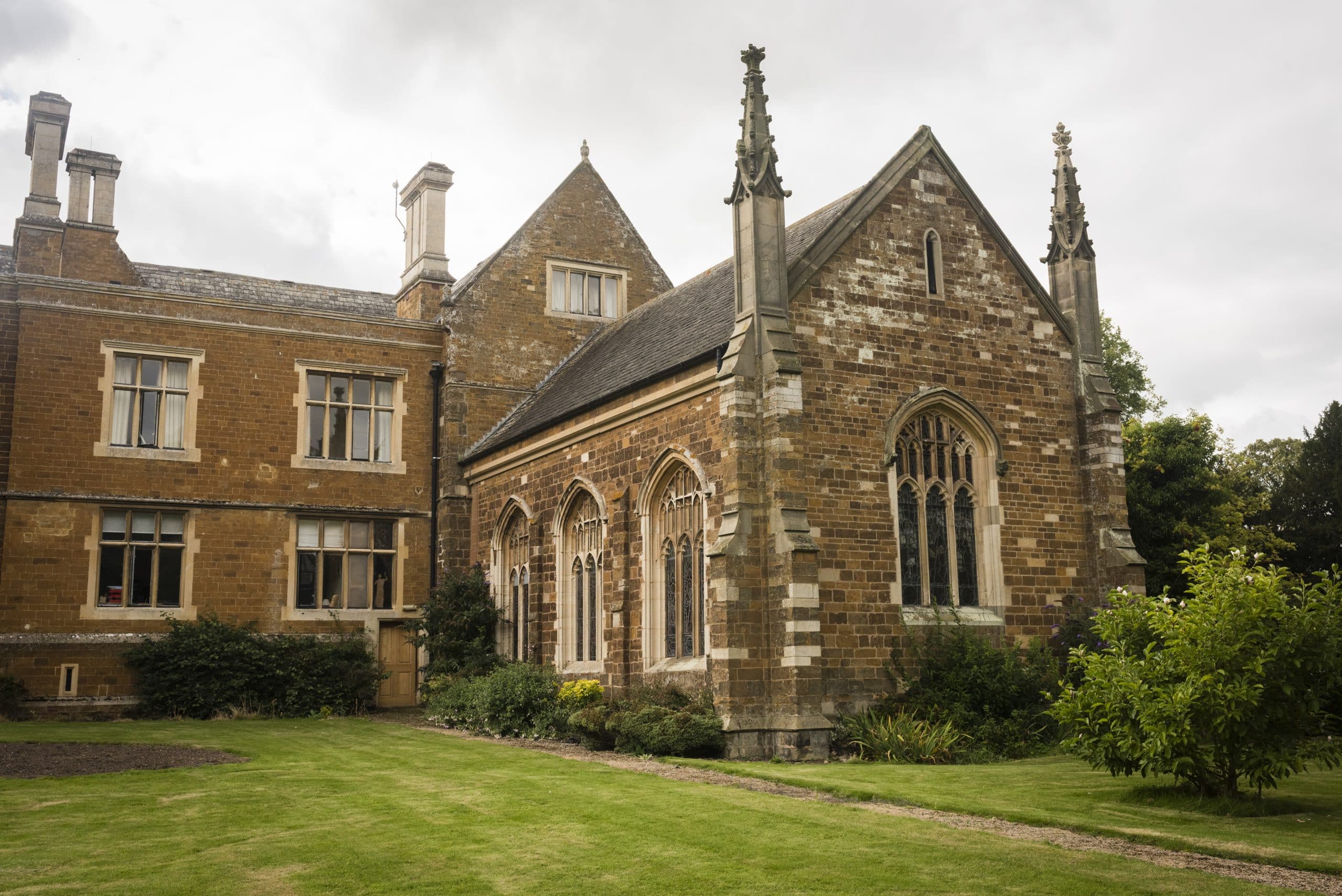
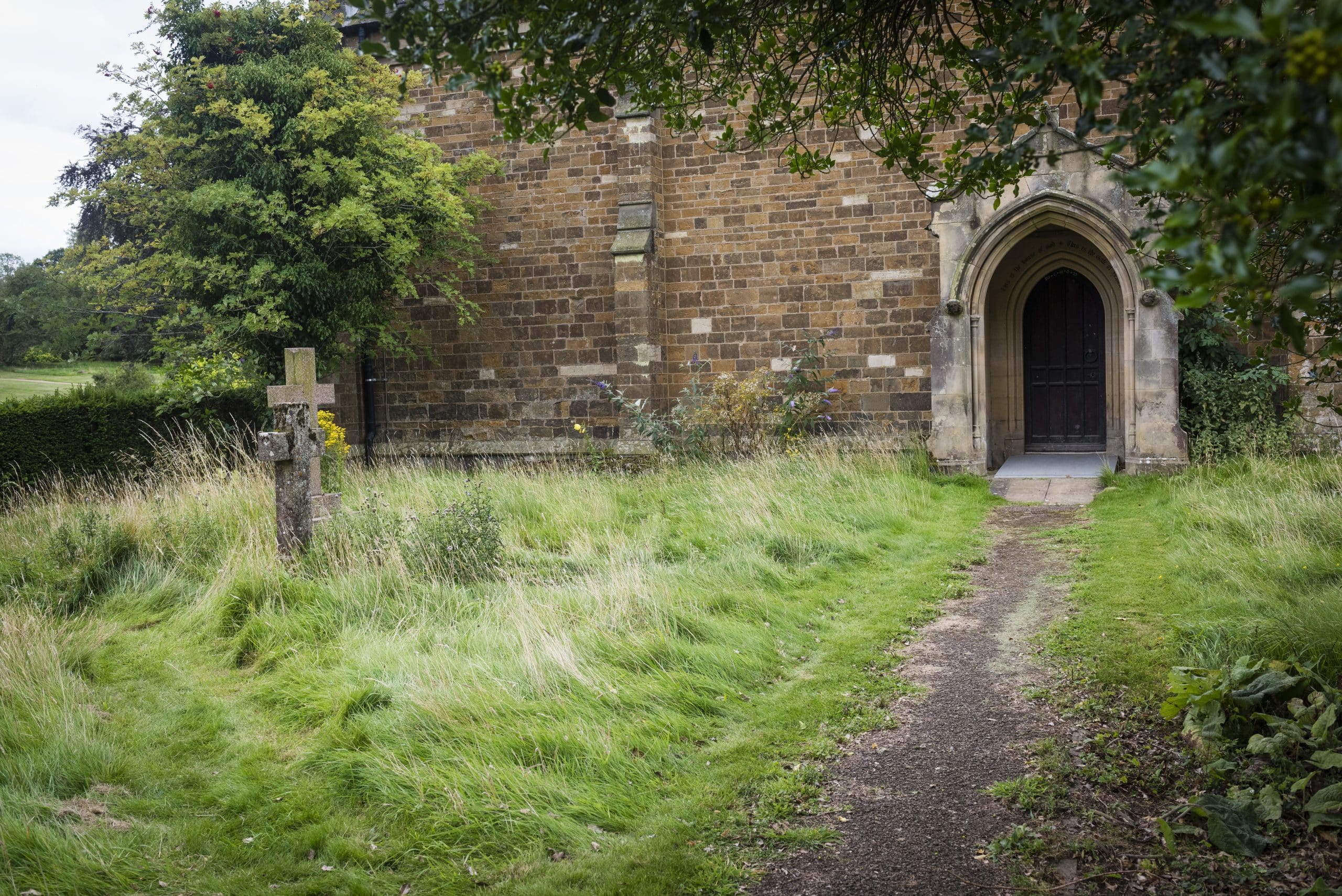
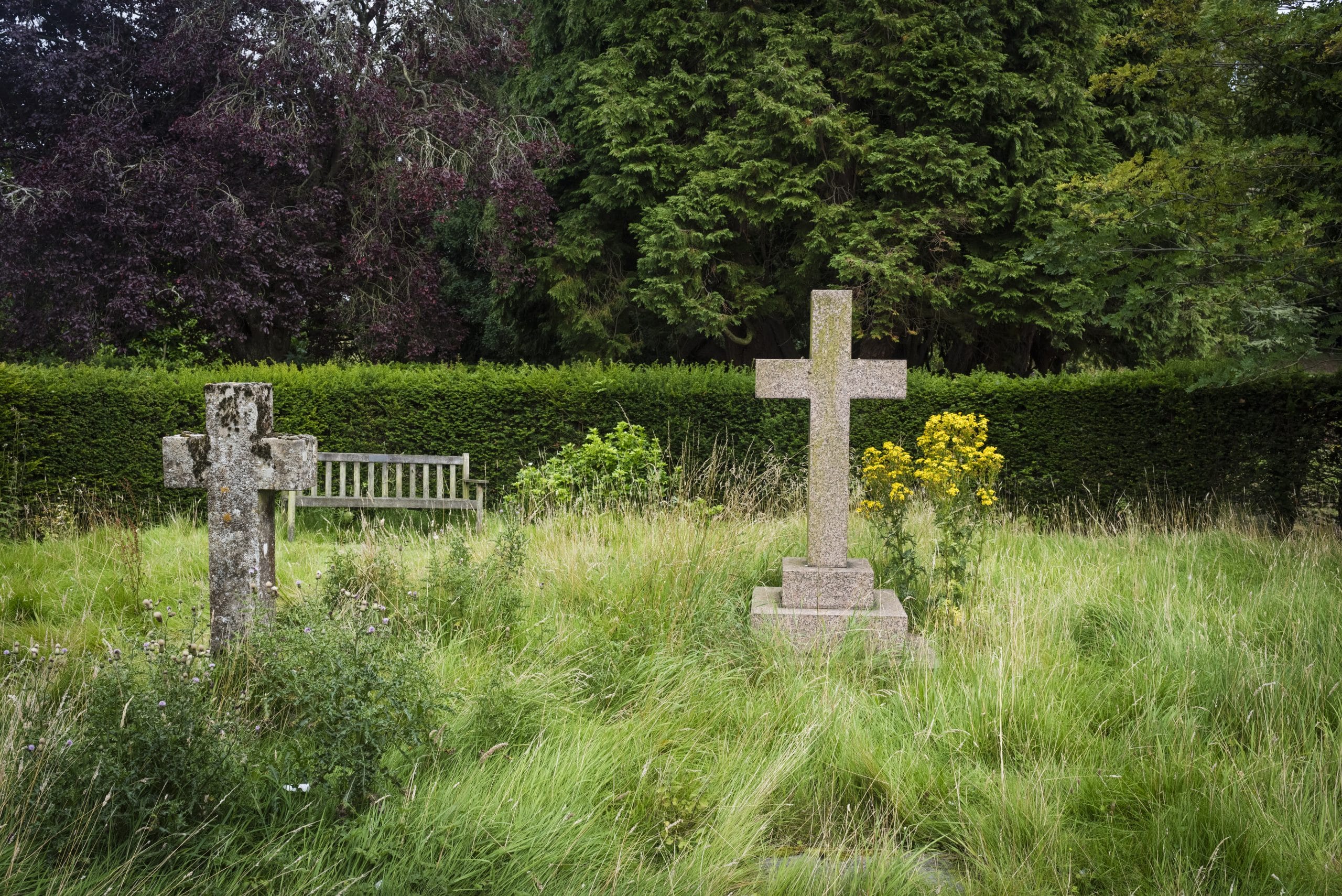
Today’s chapel, with windows only on one side, was a side chapel to the much bigger priory church on the windowless side in the area that is now the graveyard and Quiet Garden. Inside the chapel, you can see an arch from the old priory church over the font and from the outside you can see an arch and older stonework from the priory days embedded in the wall near the external chapel door. The high altar of the priory church would have been just outside today’s graveyard under the canopy of the thuja (the large multi-trunked conifer) at the northeast end of the chapel.
The Chaworth connection and the Lollards
Sir Thomas Chaworth was related to the Bassett family via his wealthy second wife, Isabel, and in the early 15th century, they founded a chantry chapel at Launde Priory. In 1459, they were buried here together, endowing the priory with, amongst other things, the contents of their richly furnished chapel at Wiverton. Sir Thomas Chaworth had been a powerful politician and landowner, sheriff of Nottinghamshire, Lincolnshire and Derbyshire as well as a member of Parliament, and he had a wide range of influential social connections, including Lord Ralph Cromwell who was Treasurer of England under Henry VI. In and out of favour with the changing Crown, he was for a time incarcerated in the Tower of London. Before its suppression, he was associated with the Lollards, a ‘proto-protestant’ religious and political movement led by John Wycliffe, which taught that the bread of the Eucharist was not the literal body of Christ, advocated access to the Scriptures in English, and emphasized the practice of private prayer.
The Cromwells and the Manor house
Thomas Cromwell, Henry VIII’s chief minister, responsible for the dissolution of the monasteries, bought Launde Priory and its estate from the Crown for £1500 at the dissolution. After visiting the priory in April 1540, he wrote in his Remembrances (a kind of personal journal) “Myself for Launde.”
Thomas was beheaded later in 1540 and never lived in the house whose plans he had prepared. However, his son Gregory who had married Elizabeth, sister of Jane Seymour, and was uncle to Prince Edward, was allowed to do so, and built the H-shaped manor house planned by his father from the ruins of the priory, retaining the priory side chapel as a place of prayer integral to the house. Launde Priory was the last religious house to be dissolved in Leicestershire and Rutland. Gregory was made Baron Cromwell of Oakham and died in 1551 of a ‘sweating fever’. He is buried in the chapel which has one of the finest examples of a Tudor memorial. The Cromwell family continued to live at Launde Abbey for around 60 years.
The Simpsons, the Finches and the Dawsons
In 1756, Launde Abbey was purchased by John Simpson of Leicester and his wealthy wife Jane Finch. They started major improvements to the house including the ‘ha-ha’ and its stone urns. The Stables, built to house 8 horses with a coach house, and a cottage for a groom at each end, also dates from this period. A brewery, dairy, grain store and ice house were added between 1800 and 1830. The brewery and the dairy around their courtyard are incorporated into today’s café and dining room servery. The establishment of the walled garden dates from the late 18th century to the early 19th century.
Through marriage, Launde Abbey became part of the Dawson estate in 1826. The most famous Dawson was Edward (Eddy) who went to Eton and Cambridge University and played cricket for Leicestershire and England in the 1920s and 30s. Family cricket matches used to be played on the grass in front of the house.
Up until 1920 the estate still consisted of 3300 acres including hunting stables for 14 horses, 2 grass and 1 hard tennis court and 13 bed and dressing rooms in the house. In 1921, 10 farms were sold reducing the estate to 1800 acres.
The Dawsons left Launde Abbey at the end of WWII after more than 100 years of living there. The family motto remains above the old entrance to the house and translates as “May our children flourish”.
Cecil Coleman, an industrialist who made his money in manufacturing hosiery was the last private owner of Launde Abbey, and having decided not to live here himself, he gifted the Abbey to the Diocese of Leicester in 1957. It was run as a small theological college for a few years before it became a retreat house.
Now Launde Abbey is owned and run by an independent charitable trust. We recognize our inheritance both as a priory, and as a country house, and for a while owned by the Diocese of Leicester. Launde Abbey’s spiritual and religious story began 900 years ago and still continues today. Now and again, though more hidden, it has also touched our national story. What we do today brings together the prayer and spiritual life of the priory and the hospitality of the extended household of the manor house, and the community of both, and offers the sanctuary that people still seek.
In Wolf Hall: the Mirror and the Light (BBC, broadcast late 2024), based on Hilary Mantel’s book of the same name, Thomas speaks of the Abbey thus:
“There is an abbey… Launde, in the heart of England. The air is always sweet there and it’s quiet. A little heaven here on earth. And I think to myself: “I’ll live here one day, when all my work is done.”